Seasonal Dog Walking Tips for Frisco, TX
A year-round guide to dog walking in Frisco, TX: summer heat safety, fall allergy season, winter cold snaps, and spring storm timing.
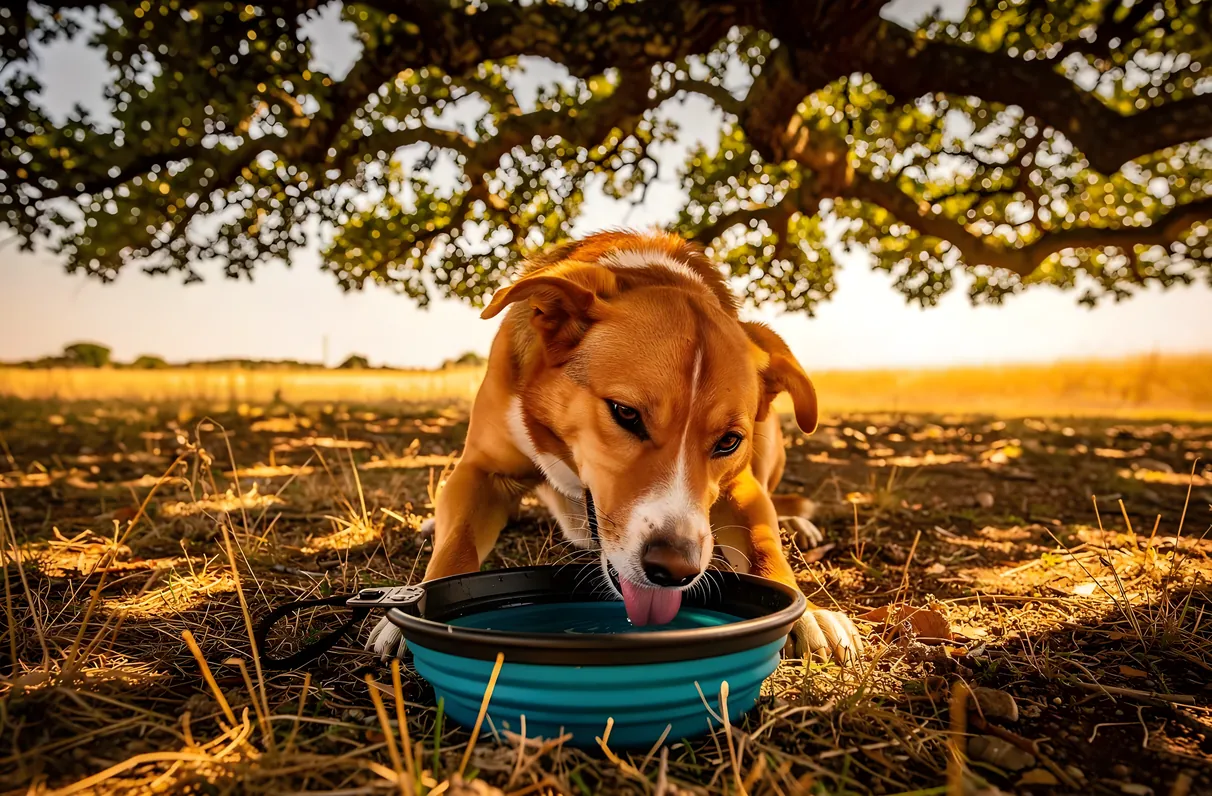
Dog walking in Frisco changes with the calendar. Summer means shifting walks to early morning or evening to avoid heat and pavement burns, while winter’s shorter daylight hours push those same walks into different hours for a different reason. This is a four-season reference, not a single-topic heat-safety checklist.
Summer poses the biggest risk: North Texas heat runs hot enough, for long enough, from roughly June through September, that walk timing has to shift toward the cooler edges of the day. Fall arrives as the easiest stretch of the year, tempered only by ragweed season, which affects a dog’s eyes, nose, or skin much like it affects people. Winter stays mild in Frisco most years, but real cold snaps show up without much warning, and shorter daylight hours change when a walk safely fits into the day. Spring brings wildflower season and fast-moving thunderstorms, plus a gradual return to longer summer-length distances after a slower winter pace.
Summer (June-September): Beating the Heat on Every Walk
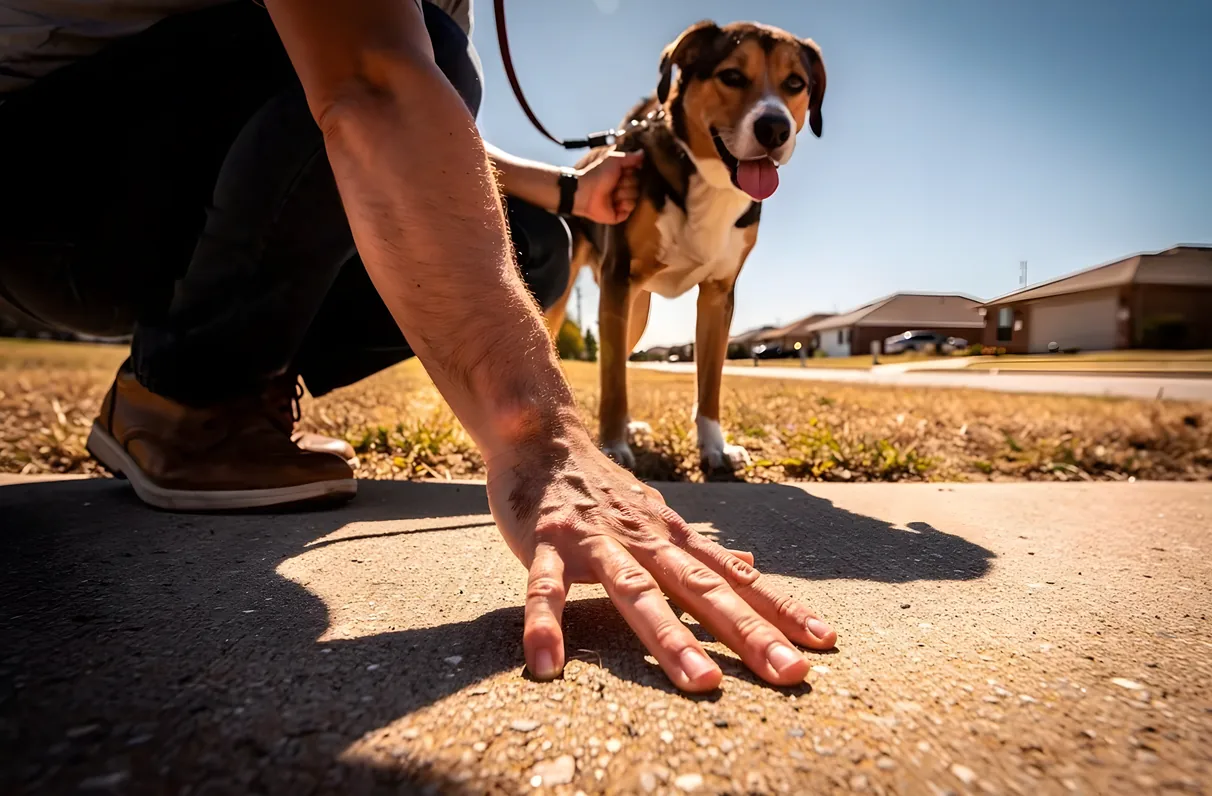
Summer demands the biggest change to a Frisco dog’s walking routine. Texas heat settles in by June and doesn’t let up until September, and midday walks stop being a comfortable option for most dogs during that stretch. Shifting to early morning or evening walks, when both air and pavement temperatures drop, is the single most effective coping strategy for the season.
Pavement burns are the concrete risk worth naming: hot asphalt can injure a dog’s paw pads well before the air itself feels dangerous, sometimes in minutes. For the specific pavement test and hydration guidance, the full dog walking heat safety checklist covers what to check before every summer walk.
Search interest in dog heat safety questions climbs sharply every summer across North Texas, a pattern that tracks with how real the local risk is. Some owners solve the midday timing problem by booking a midday dog walking service instead of shifting their own schedule.
Fall (October-November): Frisco’s Best Walking Weather, With a Catch
Fall is Frisco’s best walking season by a wide margin. The heat breaks by October, humidity drops, and a walk that felt like a chore in August starts feeling like the best part of the day again.
The catch is ragweed season, which peaks through October and November and can leave a sensitive dog with itchy eyes, a runny nose, or irritated skin just like it does for allergy-prone people. A dog that starts scratching more than usual or rubbing its face after a walk during these weeks is often reacting to ragweed pollen, not something new.
Shorter routes through less grassy areas during the worst weeks of ragweed season are usually enough to keep a walk comfortable. It’s a small adjustment, not a reason to skip Frisco’s easiest walking weather.
Winter (December-February): Rare Cold Snaps and Shorter Days
Frisco winters are mild on average, but the season still brings real cold snaps that catch dog owners off guard after months of comfortable weather. These snaps are rare rather than sustained, but a sudden drop still calls for shorter walks and a coat for smaller or short-haired dogs until it passes.
Ice on trails is the specific hazard worth watching for during these cold stretches, especially black ice that forms on shaded or elevated sections where sun exposure doesn’t reach. Specific trail conditions vary by location, and Frisco’s dog-friendly walking trails guide covers what to expect route by route.
The bigger everyday change is shorter daylight hours, sharpened each year by the return to Standard Time. A walk that worked at six in the evening back in July can become an after-dark walk by December, changing visibility for both dog and owner and making reflective gear or a leash light worth adding.
Spring (March-May): Wildflowers, Storms, and Warming Back Up
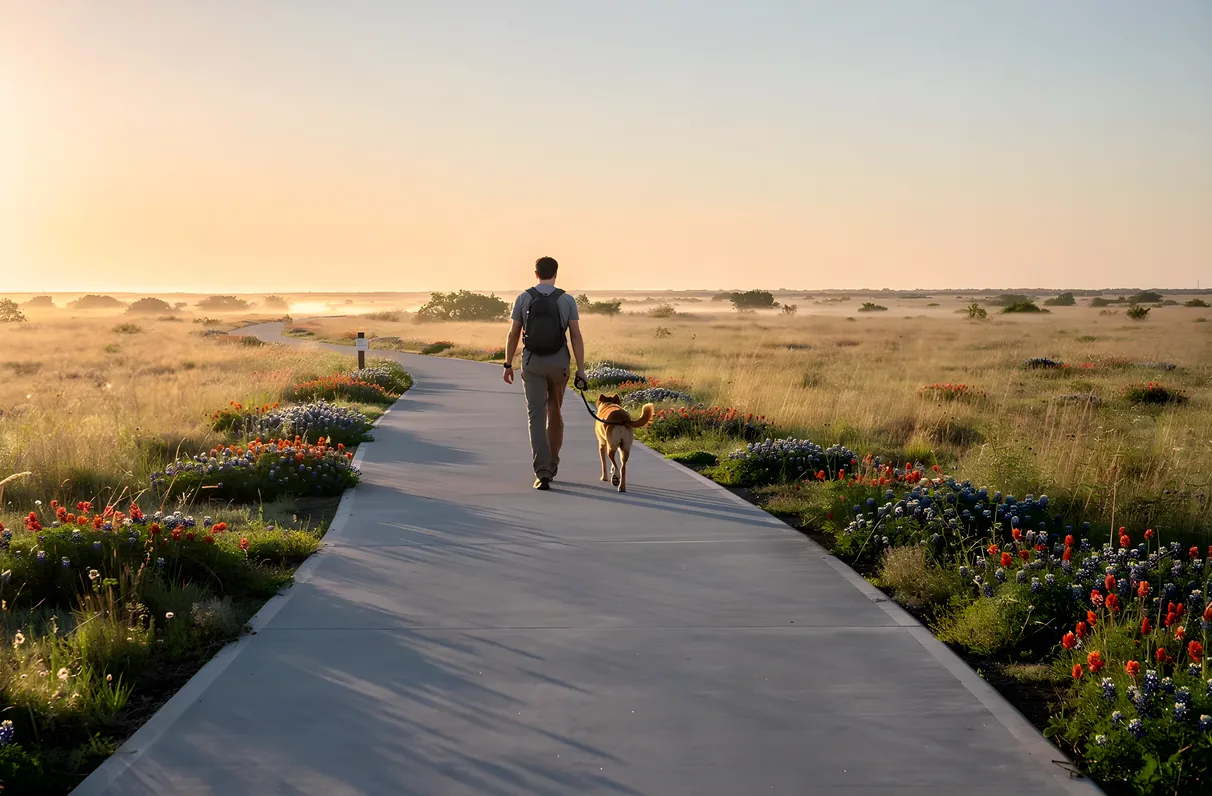
Spring in Frisco brings wildflower season, with bluebonnets and other North Texas blooms turning routine routes genuinely scenic for a few weeks. That color comes with new plant exposure, and a sensitive dog may react to pollen or new ground cover much like it reacts to ragweed in the fall.
Thunderstorm season is the practical hazard to plan around. North Texas spring storms build quickly, so a walk planned around a clear morning can still get caught by an afternoon system. Checking the forecast right before heading out catches more of these fast-building storms than a check made the night before.
Spring is also the season for building back up gradually. A dog that settled into shorter, cooler winter walks needs time to work back up to full summer-length distance, rather than jumping straight from winter pace to a long July walk.
Seasonal Dog Walking Questions
When is it too hot to walk a dog in Frisco, TX?
There’s no single temperature that applies to every dog, which is why checking the pavement directly matters more than watching a thermometer alone. As a general rule, plan summer walks for early morning or evening rather than midday between June and September. The full dog walking heat safety checklist covers the specific pavement test and hydration guidance for a proper check before heading out.
Does Frisco get cold enough to skip a dog walk?
Rarely, but it happens. Frisco sees occasional winter cold snaps rather than a sustained cold season, and small or short-haired dogs feel those snaps more than larger, heavier-coated breeds. A dog’s coat and size matter more than the date on the calendar when deciding whether a cold-weather walk needs to be shortened or skipped.
Which season requires the biggest change to a dog’s walking routine?
Summer, by a wide margin. Shifting to early or late walk timing is the single biggest routine change of the year. Winter’s shorter daylight hours come in second, since a walk that worked in daylight all summer may now happen after dark.
Building a Walking Routine That Changes With the Calendar
A walking routine that holds up across a full Frisco year bends with the season instead of bracing for just one. Summer’s early and late timing, fall’s ragweed watch, winter’s shorter days, and spring’s storm-checking habit each call for a small adjustment, not a full overhaul.
Two pieces of this picture deserve more depth than this page gives them: the full dog walking heat safety checklist for the pavement test and hydration guidance summer calls for, and Frisco’s dog-friendly walking trails for route-by-route conditions. The Frisco local dog walking guide covers the rest, from parks to neighborhood safety.