Dog Walking Heat Safety in Frisco, TX
Heat safety tips for Frisco dog walks: the 5-second pavement test, safe walking times, hydration, and heat stroke warning signs to watch for.
Two risks matter most on a hot-weather walk: heat stroke and burned paw pads, and both are preventable if a dog owner knows what to check before heading out the door. There’s no single temperature that makes a walk unsafe on its own. What matters is air temperature, pavement temperature, humidity, and the individual dog’s tolerance for heat, all together. A simple hand test on the sidewalk tells you more in five seconds than a weather app does. The safest walking windows in a North Texas summer sit early in the morning or after the sun drops in the evening, once both the air and the ground have had time to cool. Flat-faced breeds and heavily coated dogs run hotter than the rest of the pack and need extra caution even on a walk that feels manageable to everyone else. This guide covers how to spot heat stroke early, how to test pavement before a walk, when to walk, how much water to bring, and what to do if a dog starts showing warning signs.
Recognizing the Signs of Heat Stroke in Dogs
Heat stroke starts subtly and escalates fast, which is why knowing the early signs matters more than knowing the emergency ones. Watch for heavier panting than a walk usually causes, gums or tongue that look brighter red than normal, extra drooling, and a dog that seems reluctant to keep moving or suddenly wants to lie down.
Left unaddressed, heat stroke moves into more serious territory: stumbling, vomiting, collapse, and in severe cases, seizures. Searches for signs of heat stroke in dogs spike hard every summer, which tracks with how often owners realize mid-walk that they don’t actually know what to look for.
The clearest way to tell heat stroke apart from a dog that’s simply had a good workout comes down to recovery. Normal exertion panting slows within a few minutes once a dog rests in the shade. Heat stroke panting doesn’t ease up the same way. That distinction, panting that resolves versus panting that doesn’t, is the single most useful thing to watch for on a hot walk.
The 5-Second Pavement Test for Hot Sidewalks
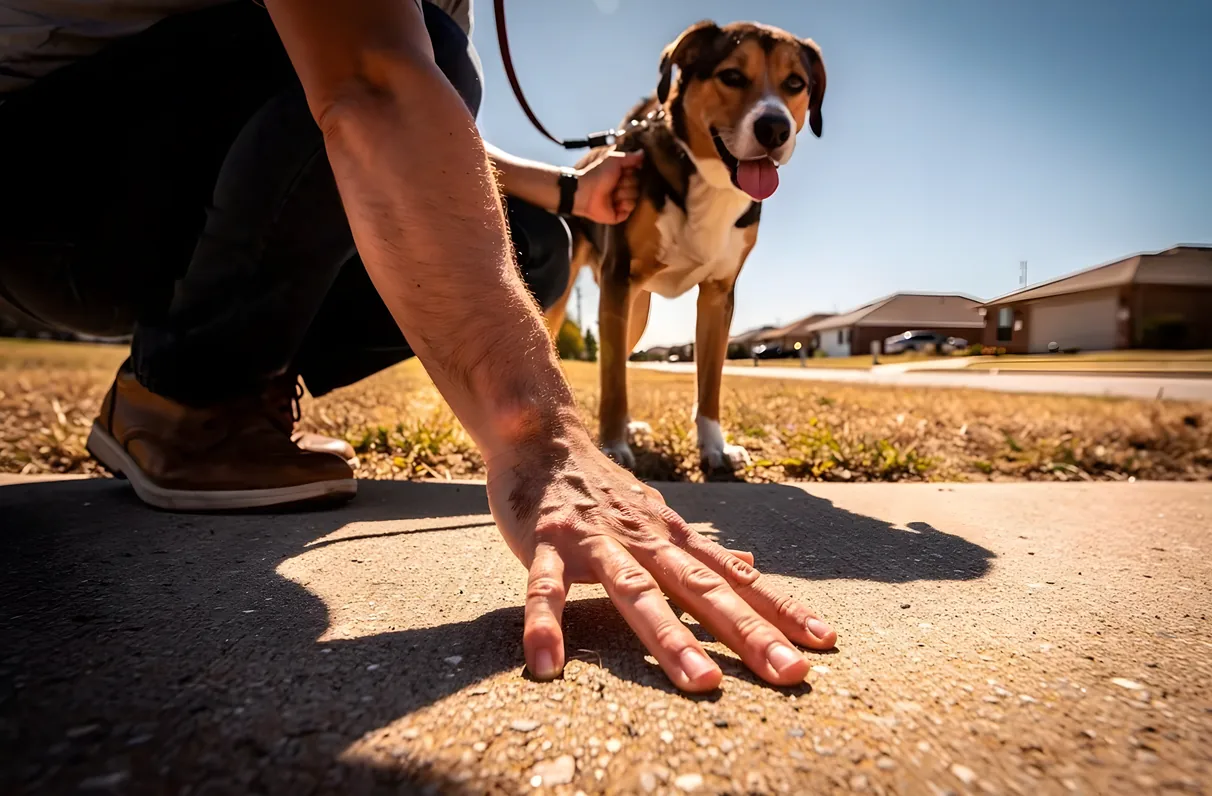
Before stepping onto pavement in summer, press the back of your hand flat against it and hold for five seconds. If it’s too hot for your hand to stay put that long, it’s too hot for a dog’s paw pads. This is the 5-second rule.
Pavement holds heat differently than the surrounding air, which is why the hand test beats checking a weather app. Asphalt and concrete in direct sun get hot enough to burn paw pads well before the day feels dangerous to a person in shoes.
If pavement fails the test, grass stays noticeably cooler, so a grassy shoulder or park path solves the problem without cutting the walk short.
Best Times to Walk Dogs During Texas Summer Heat
The safest walking windows in a Frisco summer run before roughly 8am and after roughly 7pm, once the sun has either not yet built heat into the pavement or had a few hours to let it dissipate.
That doesn’t rule out a midday walk entirely. A short walk in heavy shade, paired with a pavement check before setting out, can work on a milder day. The 5-second rule still applies no matter the hour.
For an owner whose own schedule doesn’t line up with those cooler windows, a professional walker who offers midday dog walking can shift a dog’s exercise to whatever time of day actually works best for the weather.
Hydration and Breed-Specific Heat Sensitivity
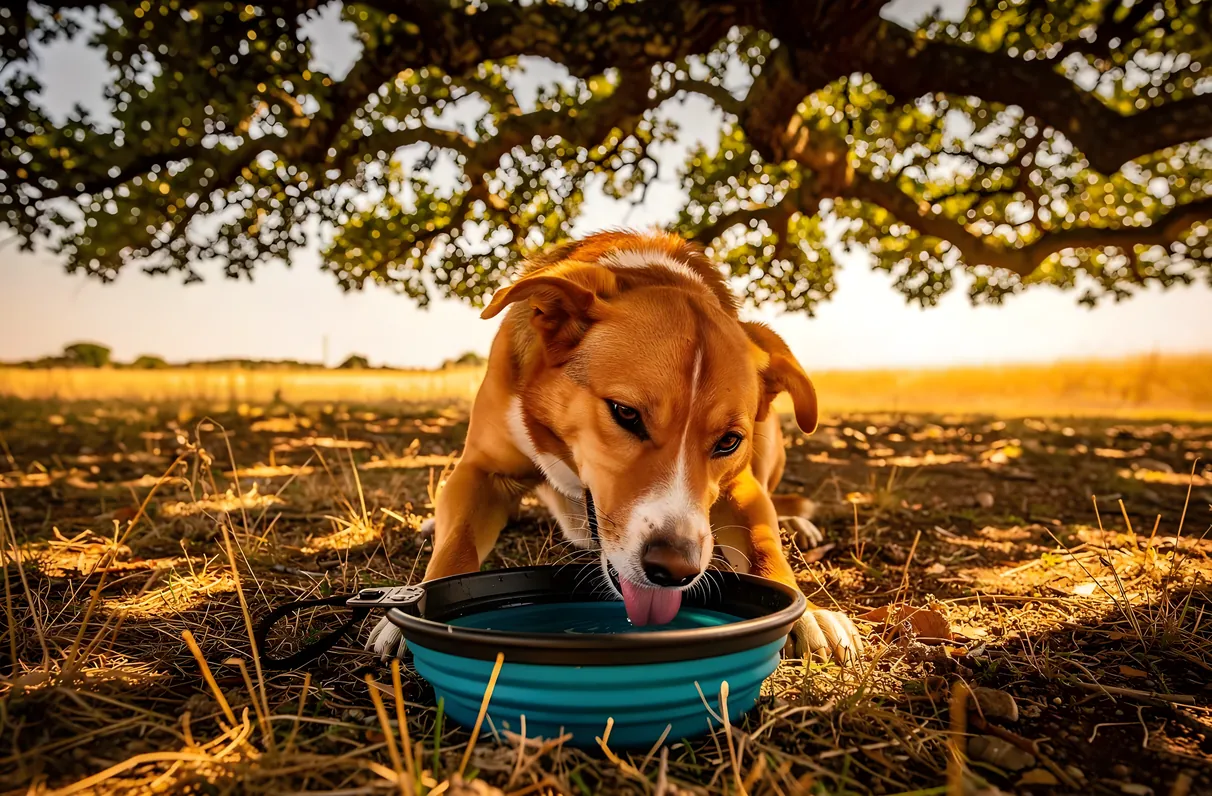
Bring water on any walk longer than 15 to 20 minutes once summer heat sets in, and offer it before a dog starts panting hard or seeking shade, not after.
Some dogs run hotter than others by build alone. Brachycephalic, or flat-faced, breeds like Bulldogs, Pugs, Boxers, and French Bulldogs have shorter airways that make panting a less efficient cooling method, so they overheat faster than a longer-nosed dog covering the same ground. Heavily coated breeds like Huskies and Golden Retrievers carry more insulation than their outdoor reputation suggests.
Age adds another layer worth a quick mention: both puppies and senior dogs tend to handle heat worse than a healthy adult dog. Senior dog walks and puppy walking both call for their own pacing beyond general heat-safety guidance.
What to Do If Your Dog Shows Signs of Heat Stroke
If a dog starts showing heat stroke symptoms mid-walk, acting quickly matters more than getting every step perfect.
- Get the dog into shade or an air-conditioned space immediately.
- Offer small amounts of cool water, not ice-cold water, and let it drink at its own pace.
- Wet the paw pads, belly, and ears with cool water, and get airflow moving with a fan or by opening car windows.
- Call a vet or an emergency animal clinic right away, even if the dog seems to be recovering. Heat stroke can cause internal damage that doesn’t show up until hours later.
Frequently Asked Questions
What is the 5-second rule for walking dogs?
Press the back of your hand to the pavement and hold it there for five seconds. If it’s too hot for your hand to stay put that long, it’s too hot for your dog’s paws too.
How hot is too hot to walk a dog in Texas?
There’s no single cutoff, but once a Frisco summer day pushes past the mid-90s with real humidity, both the air and the pavement carry meaningful risk. It’s less about one number on a thermometer and more about how conditions add up together, which is why the pavement test matters as much as the forecast.
Can dogs get heat stroke on a short walk?
Yes. Duration alone doesn’t protect a dog. A 10-minute walk across hot, unshaded pavement with a flat-faced or overweight dog can be more dangerous than a full 30-minute walk during a cooler early-morning window.
Building Heat Safety Into Every Summer Walk
None of this requires special equipment or a change in how a dog is walked day to day. It just means checking the pavement, watching the clock, bringing water, and knowing which dogs need extra caution before the walk instead of during it. For the fuller picture of how Frisco’s seasons shape a walking routine beyond just summer, seasonal dog walking tips for Frisco covers the full year this checklist is one part of. And for the rest of the practical guides Frisco dog owners rely on, the full library of dog walking resources is worth a look too.