How to Prepare for Your Dog's First Walk With a New Walker
A simple checklist for a dog's first walk with a new walker: home access, supplies to leave out, and the details worth sharing first.
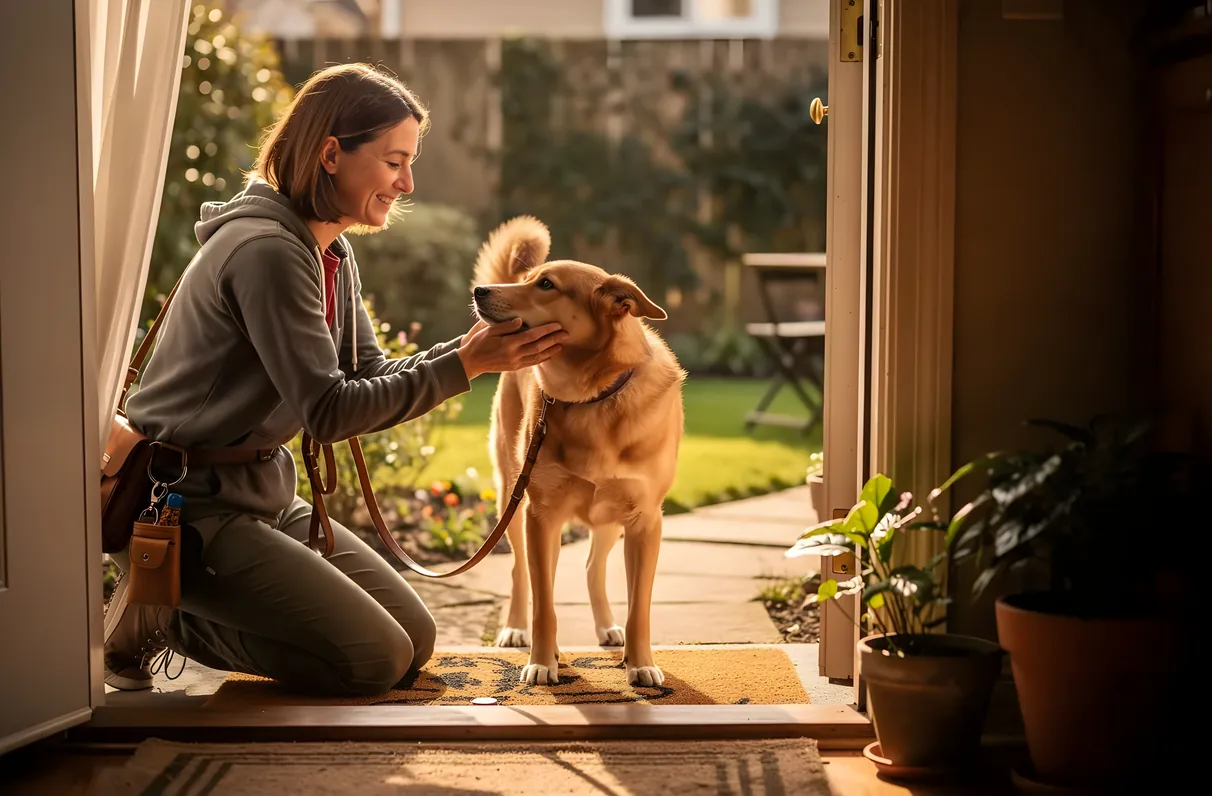
A few minutes of preparation before a new walker’s first visit prevents most of the confusion that trips up that very first walk. A dog owner who sets up home access, leaves the right supplies by the door, and hands over a short written note about the dog removes nearly all the guesswork for someone who hasn’t met that dog yet. Before the visit, sort out how the walker gets in, whether that’s a key, a lockbox, or a door code, then stage a small supply drop zone near the entrance and write down emergency contact and vet information along with anything the dog reacts to. Being home for the first walk is optional. Some owners like to watch that first meeting; plenty of others go about their day as usual. What matters more is checking in afterward: a short walk report, on time and without any red flags, is the real sign the new routine is off to a good start.
Setting Up Home Access for the Walker
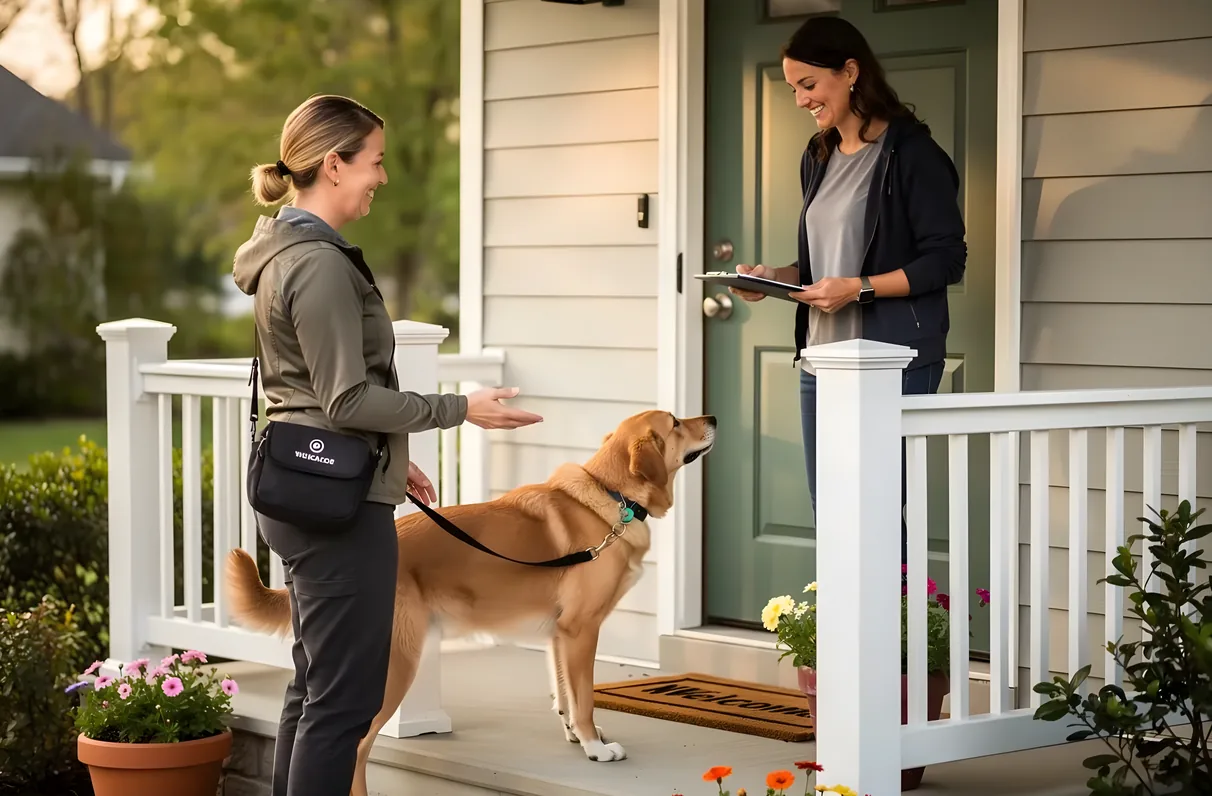
Most walkers need one of four things to get inside: a spare key, a lockbox code, a smart-lock code, or a garage code. Whichever one gets used, test it before the walker’s actual first visit, not the morning of. A spare key that sticks in the lock, a lockbox with a battery that died months ago, or a code nobody updated after the last house-sitter are the three most common reasons a first walk starts fifteen minutes late. Many walkers pair this first access setup with an in-person meet-and-greet, and what to expect from your first dog walking visit covers how that first meeting typically goes.
Building a Simple Supply Drop Zone
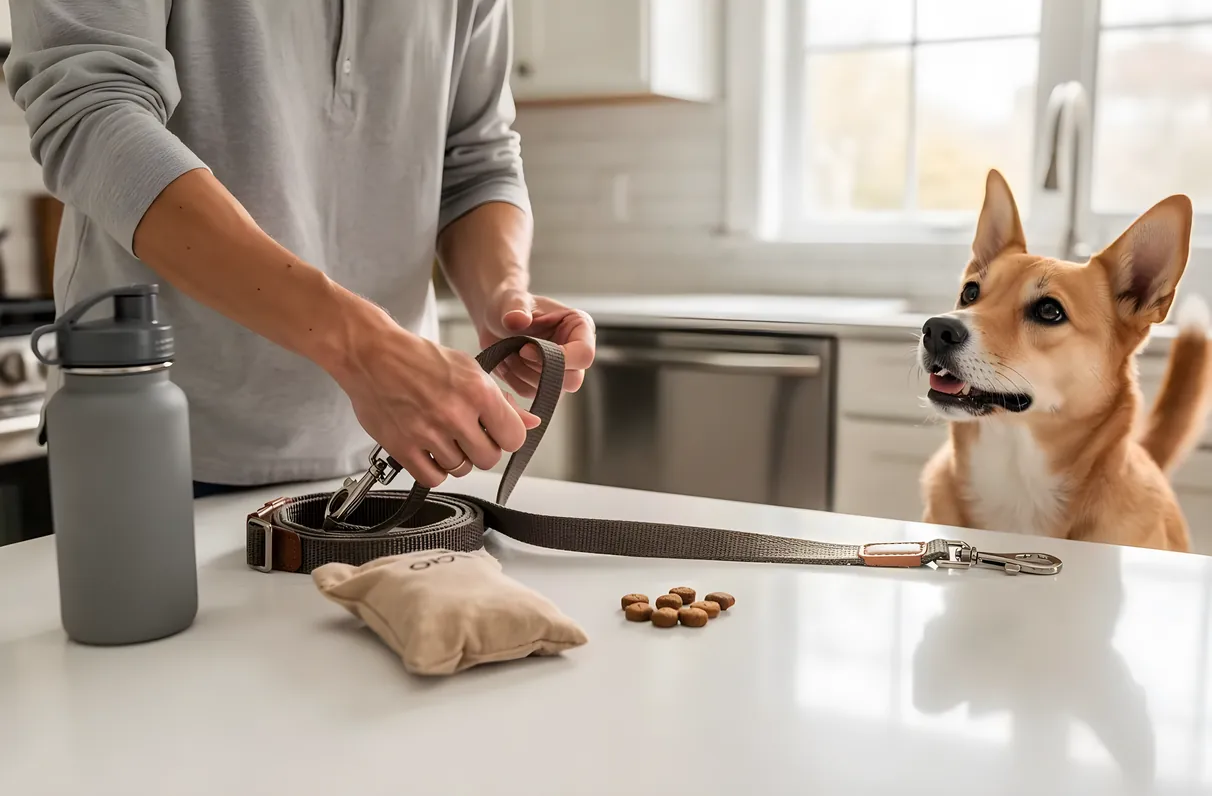
A new walker shouldn’t have to open three drawers and a hall closet just to find a leash. A single, visible drop zone near the door, a small table, a hook, a basket, whatever’s handy, means everything the walker needs is exactly where they’d expect it to be.
None of this takes long to set up, and it’s one of the easiest things an owner can do to make a stranger’s first few minutes in the house go smoothly.
Sharing Emergency and Vet Information
A written note beats a verbal one every time. Leave a card or a printed page with a phone number, a backup emergency contact, and the name and number of the dog’s vet. It sounds obvious until a walker is standing on a sidewalk with a limping dog, trying to recall a phone number they heard once, in passing, days earlier. A written note removes that problem entirely, and it’s really where the answer to what to leave out for a dog walker starts.
Telling the Walker About Your Dog’s Personality
Every dog has a short list of things that set it off, and a new walker benefits from knowing that list before the first walk, not during it. Skateboards, other dogs, thunder, the mail truck rolling down the street on schedule: whatever it is, name it. Mention any reactivity too, and list the commands the dog already knows and reliably responds to.
This isn’t oversharing. It’s the difference between a walker reacting to a problem mid-walk and one who never runs into it in the first place.
A walker who knows a dog flinches at bicycles can plan a route around that problem before it happens, instead of reacting to it mid-walk.
A few honest sentences here save a new walker from learning a dog’s quirks the hard way, usually in the middle of a busy street.
House Rules Worth Writing Down
Every household runs a little differently, and a new walker can’t guess the rules. Note which door to use coming and going, whether the dog gets off-leash yard time before or after the walk, any feeding or treat rules, and who else might be around, another pet, a kid home from school, a cat that absolutely cannot get outside. A few bullet points near the drop zone covers it.
What to Expect During the First Few Walks
Whether to be home for that very first walk is a personal call, and there’s no wrong answer. Some owners stay nearby for the first visit or two to see how the walker and the dog get along. Others go straight to their normal schedule and trust the prep work they’ve already done.
Afterward, most walkers send some kind of update, a text, a photo, a quick note on how the walk went. Checking that report for those first few visits is worth the minute it takes, since it’s the easiest way to confirm the new routine is actually working. For the fuller rundown of what that first meeting and those early walks typically look like, what to expect from your first dog walking visit walks through it in more detail.
Frequently Asked Questions
How long should my dog’s first walk with a new walker be?
Many walkers keep the very first walk shorter and lower-key than a standard visit, giving the dog time to adjust to a new person and pace. Once the dog settles in, it moves to the regular walk length, commonly 30 to 60 minutes for an adult dog.
Should I be home for my dog’s first walk with a new walker?
It’s a personal call. Some owners stay home or nearby for the first visit or two to watch how the walker and dog get along. Others go straight to their normal routine. Neither one is wrong, and the section above covers what a first walk report usually looks like if you do step out.
What should I leave out for a first-time dog walker?
At minimum: a properly fitted leash and harness, waste bags, a full water bowl, and a written note with emergency contact and vet information. The checklist above covers the full drop-zone setup and where to put it.
Settling Into a Routine
The first walk is the hardest one to plan for. Once access, supplies, and information are sorted, everything after that gets easier fast, and most of what felt like a lot of prep work turns into muscle memory within a week or two.
Still deciding who to hire in the first place? How to choose a dog walker in Frisco covers what to ask before that first visit ever happens. For more of what this guide covers, the Frisco dog walking resources hub has the rest of it.