Exercise & Health Benefits of Daily Dog Walking
Daily dog walking builds physical health and mental stimulation for your dog, and offers real health benefits for you too. See how.
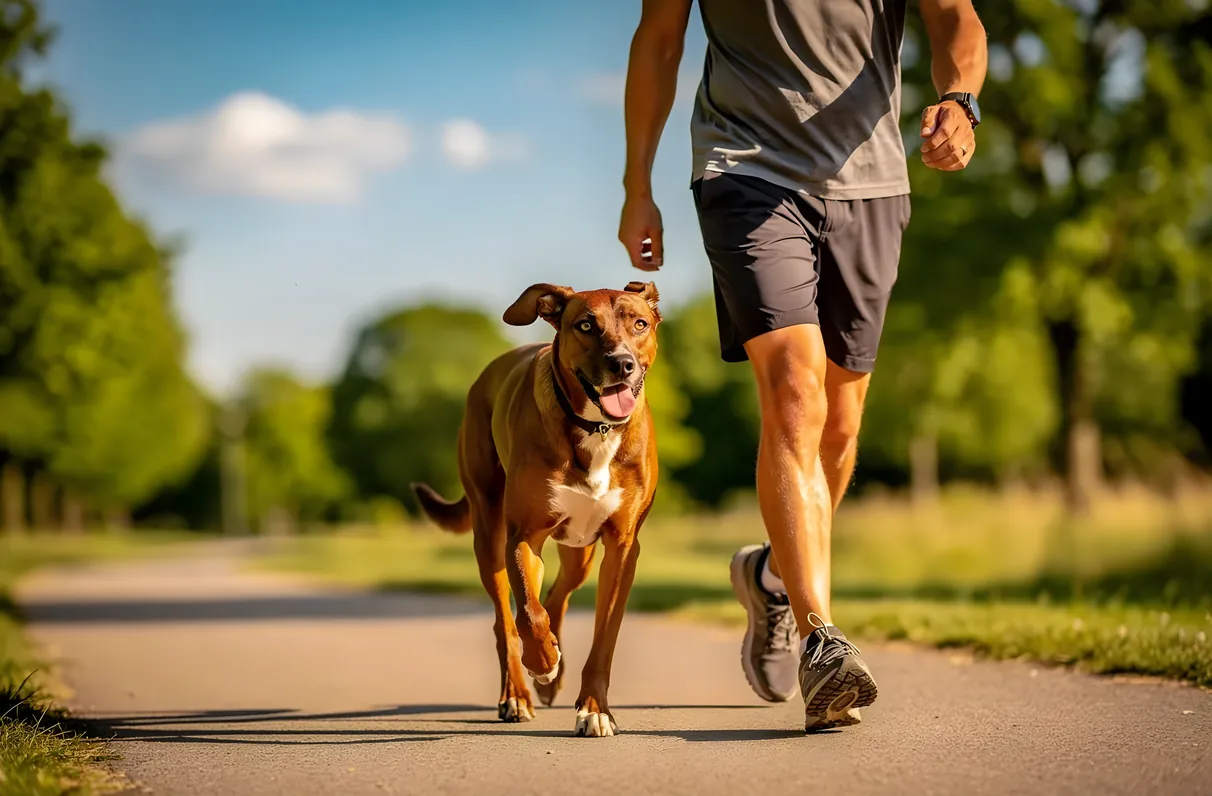
Daily dog walking supports a dog’s cardiovascular health, joint mobility, and weight management, while also providing the mental stimulation that keeps an active mind calm and engaged. Walking is more than a bathroom break: the physical side builds heart and lung fitness, keeps joints moving, and helps offset the calorie-dense diets many dogs eat, while the mental side comes from the new smells, sounds, and sights a dog only encounters outside the backyard. That mental engagement is tied to reduced anxiety and, in older dogs, to staying sharper and more alert as they age. The walk pays off for the owner too, since a daily walk is a built-in reason to get outside, move, and settle into a routine. Together, physical exercise and mental stimulation are why a single 30-minute walk does more for a dog than most people assume.
The Physical Health Case for Daily Walks
Regular walking is a form of low-impact aerobic activity that supports a dog’s cardiovascular health the same way it supports a person’s: consistent movement builds heart and lung fitness over time. Joint health benefits similarly. Moderate, consistent movement maintains joint mobility and the muscle tone that supports those joints, particularly relevant for larger breeds prone to hip and joint issues as they age.
Weight management is where walking earns its most practical credit. Walking burns calories and helps offset the calorie-dense diets many pet dogs eat, and that matters because excess weight strains joints and organs over a dog’s life. Digestive regularity follows a similar pattern: physical activity supports normal digestive motility, so a dog that walks regularly tends to have more predictable bathroom habits than a sedentary one.
None of this comes down to a single fixed number of minutes. Veterinary and canine-health guidance points to roughly 30 minutes to 2 hours of daily activity as a general baseline, with the low end suiting smaller or lower-energy breeds and the high end suiting high-energy, sporting, or working breeds. A dog’s actual needs vary by breed, age, and energy level far more than any single recommendation captures.
Mental Stimulation and Emotional Well-Being
Calling a walk “exercise” undersells what it actually does. A walk is also a sensory and cognitive experience: new smells to investigate, sounds to notice, sights to take in, and small moments of problem-solving, like navigating a route or passing another dog on the sidewalk, that a dog standing in a backyard simply doesn’t get. That combination is exactly why “mental stimulation for dogs” is one of the most-searched questions dog owners ask, and why it deserves real attention here rather than a passing mention.
A tired dog isn’t just easier to live with, it’s often a healthier one. Mental stimulation reduces the restlessness, excessive barking, and destructive chewing that tend to show up in a dog carrying pent-up energy with nowhere to put it. A dog getting both physical exercise and mental engagement during the day generally has less of that energy left to burn indoors, and for a closer look at how regular walks improve dog behavior beyond this general connection, that’s a deeper topic worth reading on its own.
A tired dog isn’t just easier to live with, it’s often a healthier one.
Reduced anxiety follows a similar logic. A predictable daily walk gives an anxious dog a routine and an outlet, and physical activity is broadly understood to have a calming effect that carries into the rest of the day, not just the walk itself. For older dogs, staying mentally engaged through regular walks is generally understood to support alertness and continued engagement with the world as they age, the same way staying active and curious tends to benefit an aging mind more broadly. That’s a general benefit worth knowing about, not a substitute for the pacing an older dog’s walk actually needs day to day.
The Benefits for You, the Owner
A daily dog walk is also a daily walk for the owner. It’s a built-in reason to get outside and move, something a lot of adults don’t otherwise prioritize on a busy day.
Time outdoors and a change of scenery have a well-understood calming effect for people too, not just dogs. Stepping away from a desk or a house full of chores for even 20 or 30 minutes tends to reset the day in a way little else does.
A dog’s need for a walk also creates a consistent daily anchor. That structure benefits an owner who does better with routine, since the walk happens whether or not the rest of the day goes as planned.
Building Daily Exercise Into a Frisco Routine
Frisco’s climate shifts the best time of day for a walk across the year. In peak summer heat, an early morning or evening walk keeps both dog and owner more comfortable than a midday outing, while Frisco’s milder winters leave more flexibility in when a daily walk fits. The routine stays the same either way: consistent daily movement, timed sensibly around the season.
For an owner who wants that consistency but can’t always fit it into their own schedule, a solo dog walk is worth a closer look, since it’s built around delivering that same daily exercise and mental stimulation reliably.
Finding a Walking Routine That Fits Your Dog
The physical benefits, the mental stimulation, and what it gives the owner all compound with consistency. A single walk here and there helps, but the real payoff, the calmer temperament, the steadier weight, the sharper focus, comes from making it a daily habit rather than something that happens when time allows.
For a closer look at what a solo dog walk actually looks like day to day, that’s the natural next step for building consistency into a routine. And for an owner whose biggest concern is behavior rather than health, how regular walks improve dog behavior goes deeper on that connection. Exercise is one of several benefits of professional dog walking worth understanding before hiring a walker.
Frequently Asked Questions
How often should you walk your dog?
Most adult dogs do well with at least one walk a day, and many benefit from two shorter walks, morning and evening, rather than one long one. Frequency matters as much as duration for keeping both the physical and mental benefits consistent.
How long should a dog walk be?
It depends on the dog’s age, breed, and energy level more than a fixed number. A young, high-energy breed may need a much longer walk than a small or senior dog, and duration can be split across the day rather than done in one stretch.
How much exercise does a dog need, and does it change by breed?
Yes, it changes significantly. Lower-energy and smaller breeds typically need less daily activity than high-energy, sporting, or working breeds. A dog’s individual energy level is usually a better guide than a single number that applies to every dog.
Does walking really help with a dog’s mental health, or is it just exercise?
Both. A walk gives a dog new smells, sounds, and sights to take in, which is a form of mental stimulation a backyard alone can’t provide. That sensory engagement is a big part of why a walked dog often settles down and rests better afterward.