How Dog Walking Builds Socialization Skills
Dog socialization means calm exposure to new dogs, people, and places. See how regular walks build that confidence, and when group walks help most.
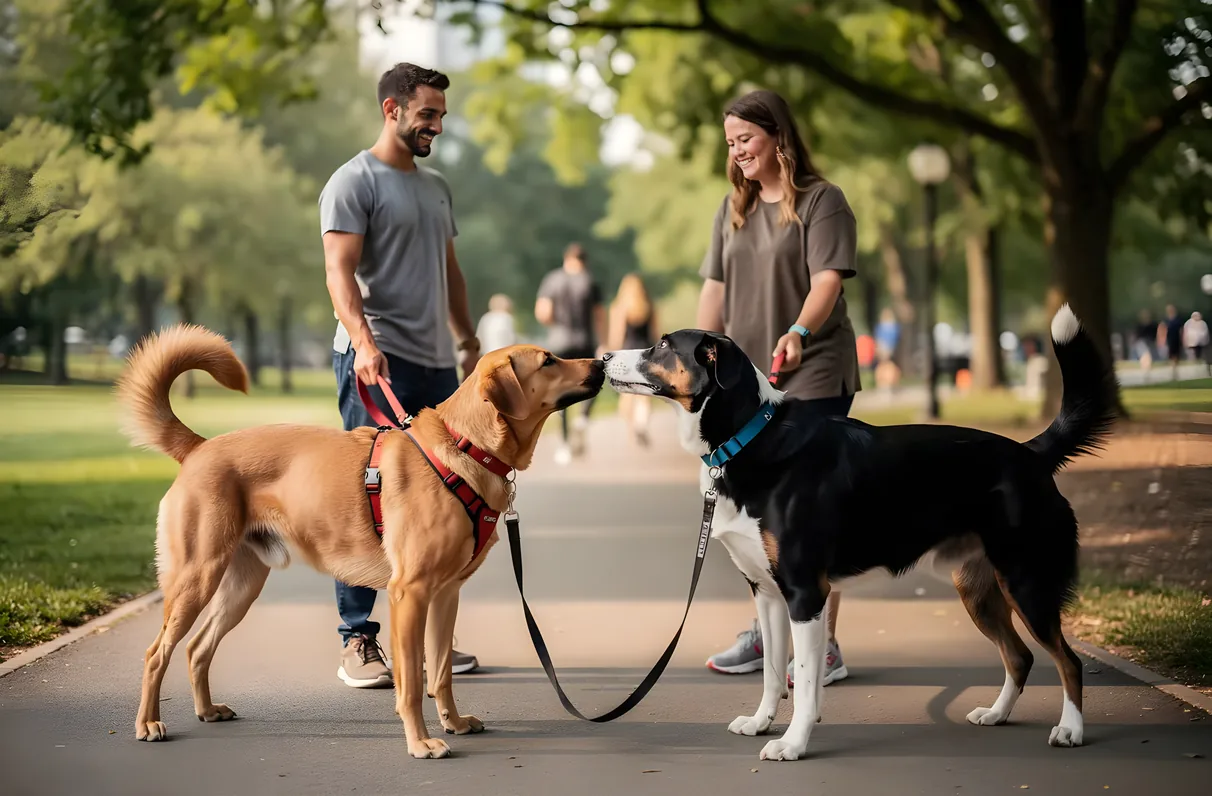
Dog socialization means calm, comfortable exposure to new dogs, new people, and new environments, not a quick meet-and-greet at the park or a handful of obedience commands. A well-socialized dog handles a passing jogger, a barking dog next door, or a crowded vet waiting room without panic, because it has practiced staying relaxed in situations like those before.
Walking provides that practice about as low-stress as it gets. Every walk repeats a similar pattern, a leashed dog passing on the sidewalk, a stranger saying hello, a new sound around the corner, and each repetition teaches a dog the unfamiliar usually isn’t dangerous. Puppies pick this up fastest during an early developmental window, though the process never fully closes. Poor socialization tends to show up as fear, reactivity, or aggression around new dogs or people, and a walker who reads dog body language turns everyday walks into the safest version of that exposure a dog can get.
What Dog Socialization Actually Means
Socialization gets confused with obedience training fairly often, but they solve two different problems. Obedience teaches a dog to sit, stay, or come when called. Socialization teaches a dog how to feel calm in situations it hasn’t fully mastered yet: around other dogs, around unfamiliar people, and in unfamiliar places full of new sounds and sights.
Those three domains matter because a dog runs into all of them constantly. A well-socialized dog handles a vet visit without shaking, greets a houseguest without cowering or lunging, and passes another leashed dog on a walk without a fuss. None of that comes from teaching commands. It comes from repeated, positive exposure over time.
How Regular Walks Build Confidence Around Other Dogs, People, and Places
Each walk delivers a small, manageable dose of the outside world: a passing dog, a jogger, a lawnmower running somewhere down the block. A dog doesn’t need one dramatic exposure to something new; it needs the same mild version of that experience over and over, until it stops registering as a threat.
Consistency does more of the work here than intensity ever could. A dog walked a few times a week around familiar sights and sounds builds confidence steadily, while a dog thrown into an overwhelming situation, a crowded dog park or a loud street festival, often comes away more nervous than before. Frisco’s neighborhoods make this easy to build into a routine, since leashed dogs, strollers, joggers, and normal traffic noise show up on almost any walk.
Regular, low-key exposure like this is what actually reshapes a dog’s comfort level over weeks and months, not one big outing.
The Puppy Socialization Window (and Why It Doesn’t Really Close)
Puppies go through an early developmental stretch, commonly described by veterinary behaviorists as roughly the first three to four months of life, when new experiences get absorbed fastest. A puppy that meets calm dogs, friendly strangers, and everyday noises during that window tends to grow into an adult dog who takes the same things in stride.
Missing that window isn’t a life sentence, though. An adult dog that didn’t get much exposure early on can still build real social confidence; it just takes more patience and smaller steps than it would have as a puppy. The mechanism doesn’t change with age, only the pace does.
Regular walks work for both ends of that timeline: reinforcing good habits already forming during a puppy’s socialization window, and slowly rebuilding confidence in an adult dog playing catch-up.
Signs Your Dog Needs More Socialization
Poor socialization tends to show up in one of three ways. Fear looks like cowering, a tucked tail, or trying to hide or bolt when a new person or dog gets close. Reactivity looks like barking, lunging, or freezing at the sight of another dog on leash, even from a distance. Aggression, growling or snapping when approached, is the most alarming of the three, though it usually comes from the same place as fear rather than any kind of dominance.
None of these mean a dog is bad or broken. They mean a dog hasn’t had enough calm, controlled exposure to build comfort yet, and that’s a gap regular walks can close.
Group Walks as Structured Social Practice
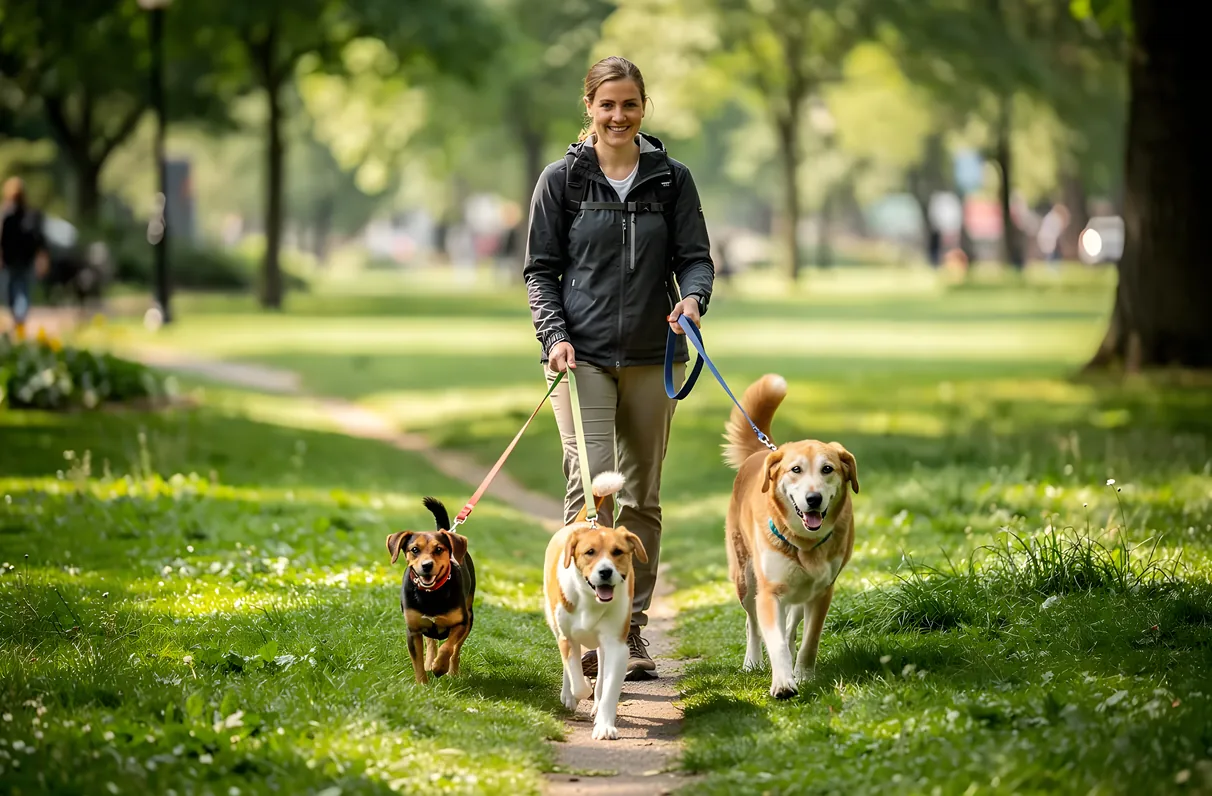
A group walk puts a dog around other dogs in a setting that’s more supervised than a solo neighborhood stroll, which makes it one of the more structured forms of social practice available. Instead of one passing dog at a time, a dog gets repeated, managed exposure to several others in a single outing.
That structure only works if someone is actually reading the dogs involved. An experienced walker watches body language throughout, creates distance the moment a dog looks overwhelmed, and manages introductions so a tense moment doesn’t turn into a real setback. That kind of attention is what separates group dog walks built for socialization from simply turning several dogs loose together and hoping for the best.
Common Questions About Dog Socialization
How do I socialize my dog through walking?
Start with calm, predictable routes and let the dog watch other dogs and people from a comfortable distance before closing that distance. The same walk, done a few times a week, teaches a dog that new sights and sounds are normal.
What is the socialization window for puppies?
Many veterinary behaviorists point to roughly the first three to four months of a puppy’s life as the stretch when new experiences get absorbed most easily. That window closing doesn’t end the process, though. Dogs of any age can build social confidence with patient, repeated exposure.
What are the signs my dog needs more socialization?
Watch for fear (cowering, a tucked tail, avoiding new people or dogs), reactivity (barking or lunging at other dogs on leash), or aggression (growling or snapping when approached). These usually point to a lack of comfortable exposure, and structured walks help close that gap.
Building Social Confidence One Walk at a Time
Socialization isn’t a one-time lesson. It’s something a dog keeps practicing every time it leaves the house, and group dog walks with a walker who reads dog body language give it steady chances to get more comfortable with the world.
For owners dealing with more than social nerves, how regular walks improve dog behavior covers the exercise-to-behavior connection. And for the full picture of what routine walking does for a dog, the benefits of professional dog walking rounds out the rest.