Group Dog Walks in Frisco, TX
See how group dog walks work in Frisco, TX: pack sizes, dog matching, benefits, and which dogs aren't a good fit for group walking.
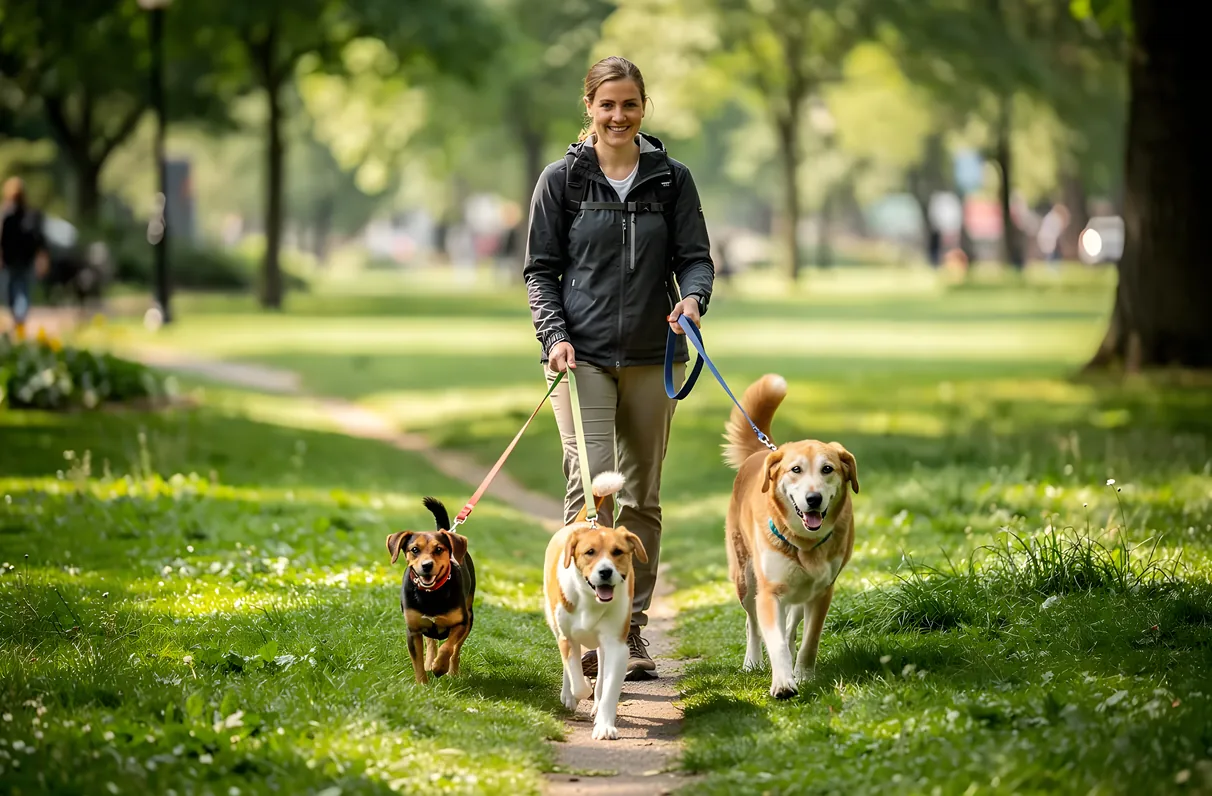
A group dog walk, sometimes called a pack walk, pairs a small number of matched dogs with one walker who keeps a fixed walker-to-dog ratio and watches every dog’s body language for the entire route. That’s different from a walker simply taking several dogs out at once because it’s efficient for their schedule. In a real group walk, the dogs have been screened for size, energy, and temperament before they ever share a leash.
Group sizes generally run two to four dogs per walker, small enough that one person can actually track how each dog is doing rather than just holding a fistful of leashes. Before a new dog joins a regular pack walk, most walkers run a short meet-and-greet or trial walk to check temperament and leash manners against the rest of the group. Dogs that pass get real social benefits from the arrangement, at a lower cost per dog than a private solo visit. Not every dog is a fit, though. A dog that reacts to other dogs on leash, or a puppy still building basic leash skills, usually does better with solo walks first.
What Counts as a Professional Group Dog Walk
A real group walk means the dogs in it were deliberately chosen to walk together. A walker running a legitimate pack walk has already checked that each dog’s size, energy, and temperament fit the others, keeps a capped walker-to-dog ratio, and keeps watching every dog’s behavior throughout the route rather than treating the walk as a set-it-and-forget-it errand.
That’s a meaningfully different service than a walker simply taking out several unrelated dogs at once because it’s efficient for their route. Both can look the same from the outside, but only one involves a matching or screening step before the leashes come out.
Group walks are commonly scheduled during the workday, filling the same window many owners use for midday dog walking when a lunch-hour visit fits a household’s routine better than an early-morning slot.
Typical Group Sizes for Pack Walks
Most professional pack walks keep groups small: generally two to four dogs per walker. That size isn’t arbitrary. A smaller group means the walker can actually watch every dog’s body language and step in before a problem starts, instead of just holding leashes.
How Walkers Match Dogs by Size, Temperament, and Energy
Three factors drive how a walker builds a compatible group. Size matters first: a large, boisterous dog generally isn’t paired with a small or easily overwhelmed one. Energy level matters just as much, since a high-energy dog and a slow, low-energy dog don’t get much out of walking together. Temperament rounds it out: confident versus anxious, playful versus reserved.
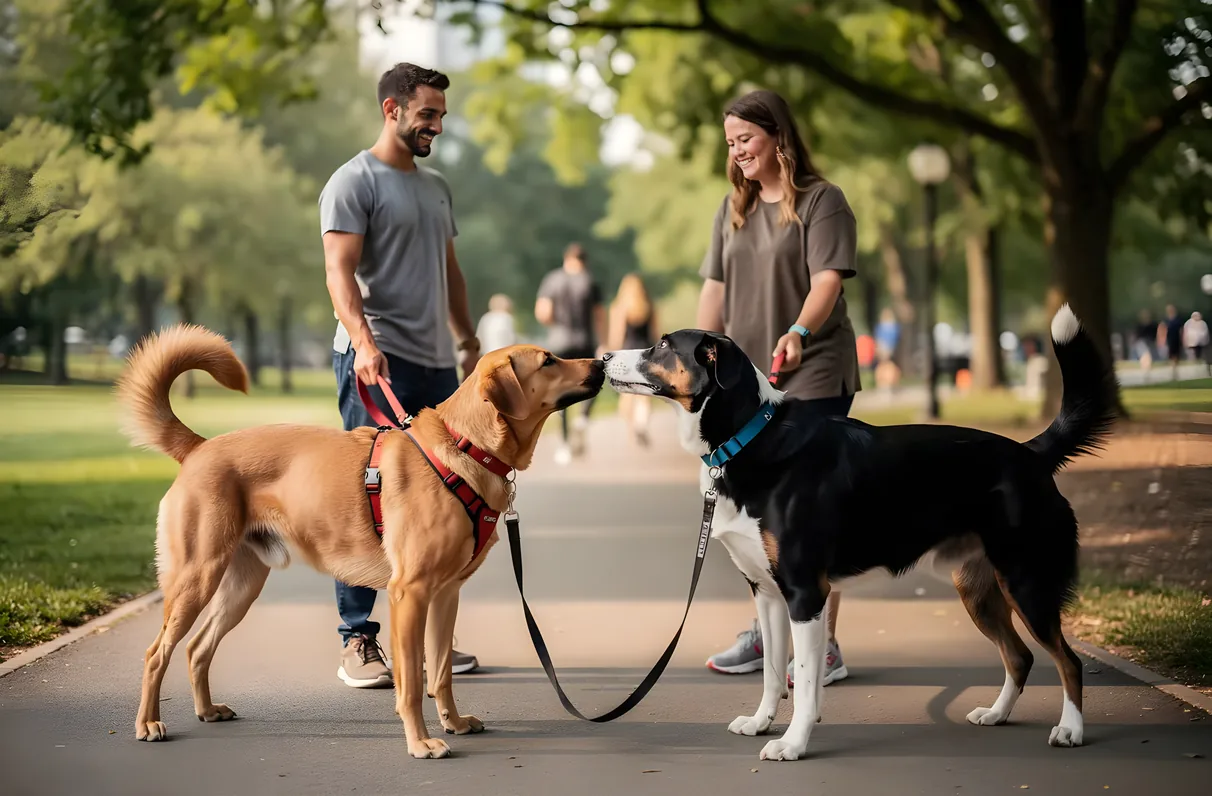
Before adding a new dog to a regular group, most walkers run a short meet-and-greet or trial walk to see how the dog behaves around the others. Basic leash manners are a baseline requirement, too, since a dog that lunges or pulls hard is harder to manage safely alongside others.
Why Group Walks Support Socialization (and Cost Less Per Dog)
Supervised time around other well-matched dogs helps a dog build confidence and comfort around unfamiliar dogs in general, not just the specific dogs in its regular group. See how dog walking builds socialization skills for a closer look at why supervised time around other dogs matters for a dog’s overall behavior.
There’s a practical upside for the owner’s wallet, too. Group walks are typically priced lower per dog than a private solo visit, since the walker’s time is split across several dogs instead of one. Exact pricing varies by provider, but the per-dog math is usually the reason a group walk costs less than a comparable solo visit.
When a Group Walk Isn’t the Right Fit
Group walking isn’t the right call for every dog, and a legitimate walker should be willing to say so. A dog that reacts to other dogs on leash, whether that shows up as barking, lunging, or visible high stress, generally isn’t a safe fit for a group setting. Adding a reactive dog to a pack walk puts every dog on the route at risk, not just the one struggling.
Puppies under about six months are usually better served by solo walks, too, while they’re still building basic leash skills. A walker willing to say a group walk isn’t the right fit for a particular dog, rather than adding every dog to fill a route, is one worth trusting with the decision.
Frequently Asked Questions
How many dogs are usually in a group dog walk?
Most professional pack walks keep groups small, generally two to four dogs per walker, so the walker can watch every dog’s body language and step in before a problem starts. Larger groups make that kind of attention much harder to maintain.
How do dog walkers decide which dogs can walk together?
Walkers typically match dogs by size, energy level, and temperament, and often run a short trial walk or meet-and-greet before adding a new dog to a regular group. A dog that pulls hard or plays rough usually isn’t paired with a smaller or more easily overwhelmed dog.
Is a group walk safe for a reactive or anxious dog?
Not usually, at least not right away. A dog that reacts to other dogs on leash, or a puppy still building basic leash manners, generally does better starting with solo dog walks until a walker has a clearer read on how the dog behaves around others.
Group Walk or Solo Walk? Choosing What Fits Your Dog
A group walk works well for a social, leash-mannered dog that enjoys company and can hold its own in a small pack. For a reactive dog, a young puppy, or an owner who wants one-on-one attention every visit, solo dog walks give a walker full focus on a single dog instead of managing a group.
Not sure which format fits your dog? The full range of dog walking services in Frisco breaks down every walk type side by side, so it’s easier to match the service to the dog rather than the other way around.