Leash Training Tips for Frisco Dog Owners
Practical leash training tips for Frisco dog owners: the right gear, the stop-and-wait method, and how to handle pulling and everyday distractions.
Leash training teaches a dog to walk beside its person without dragging them down the sidewalk, and it comes down to consistent handling more than natural talent on either end of the leash. Leash pulling isn’t usually a stubborn streak. It’s a habit that formed because pulling has always gotten a dog exactly where it wanted to go, only faster. The right gear helps: a flat collar or front-clip harness, paired with a standard four-to-six-foot leash instead of a retractable one. Training can start as early as eight to ten weeks old, once a puppy is comfortable wearing a collar or harness, though full neighborhood walks usually wait until vaccinations catch up. At the center of it all sits the stop-and-wait method: the moment the leash goes tight, the walk pauses, no forward progress until there’s slack again. What derails most leash training isn’t a stubborn dog. It’s a retractable leash, inconsistent handling, or a squirrel that shows up mid-lesson. This guide covers all of it, no gear pitch or training app required.
Choosing the Right Leash Training Equipment
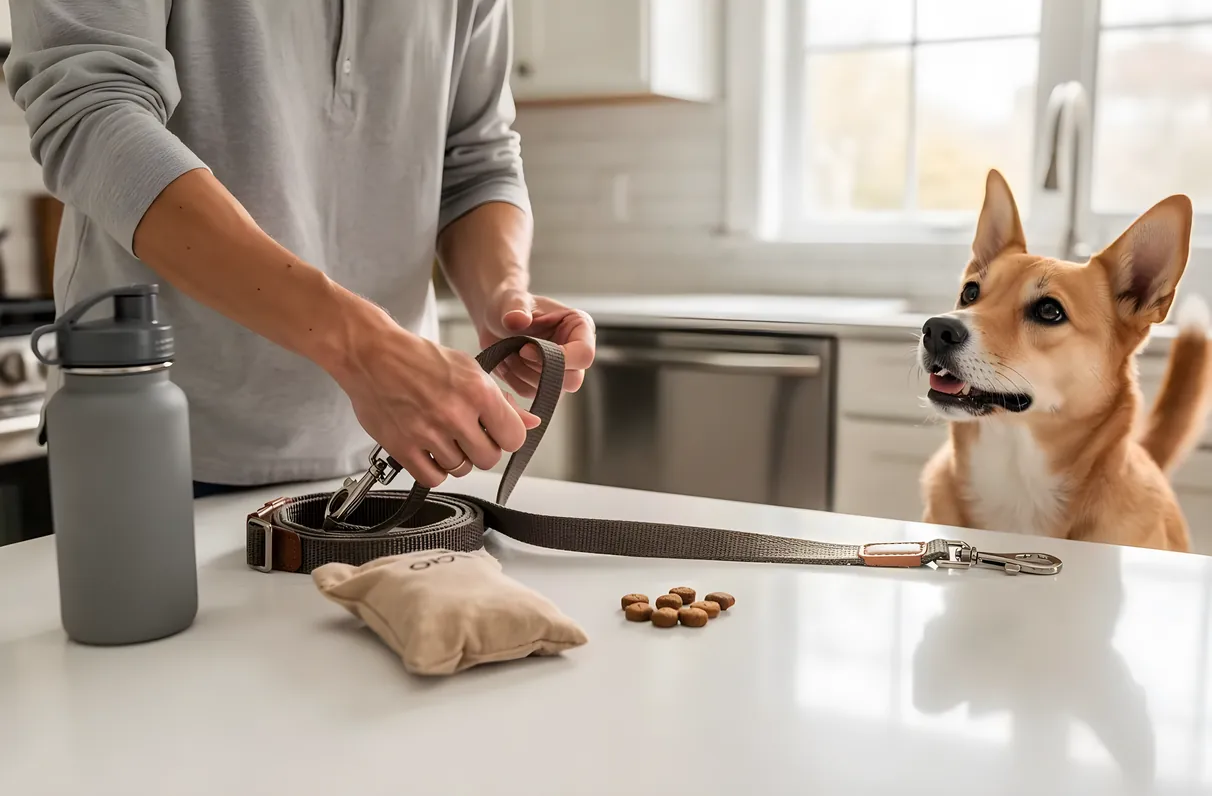
Flat collar vs. harness comes down to how much control an owner needs. A front-clip harness redirects a dog’s forward momentum sideways instead of letting a pull land on the neck, which matters most for puppies and strong pullers of any age. A flat collar works fine once a dog already walks reasonably well.
The leash matters just as much. A standard four-to-six-foot leash keeps a dog close enough to correct quickly. A retractable leash does the opposite, stretching out to reward the exact behavior loose leash walking is trying to erase.
When to Start Leash Training a Puppy
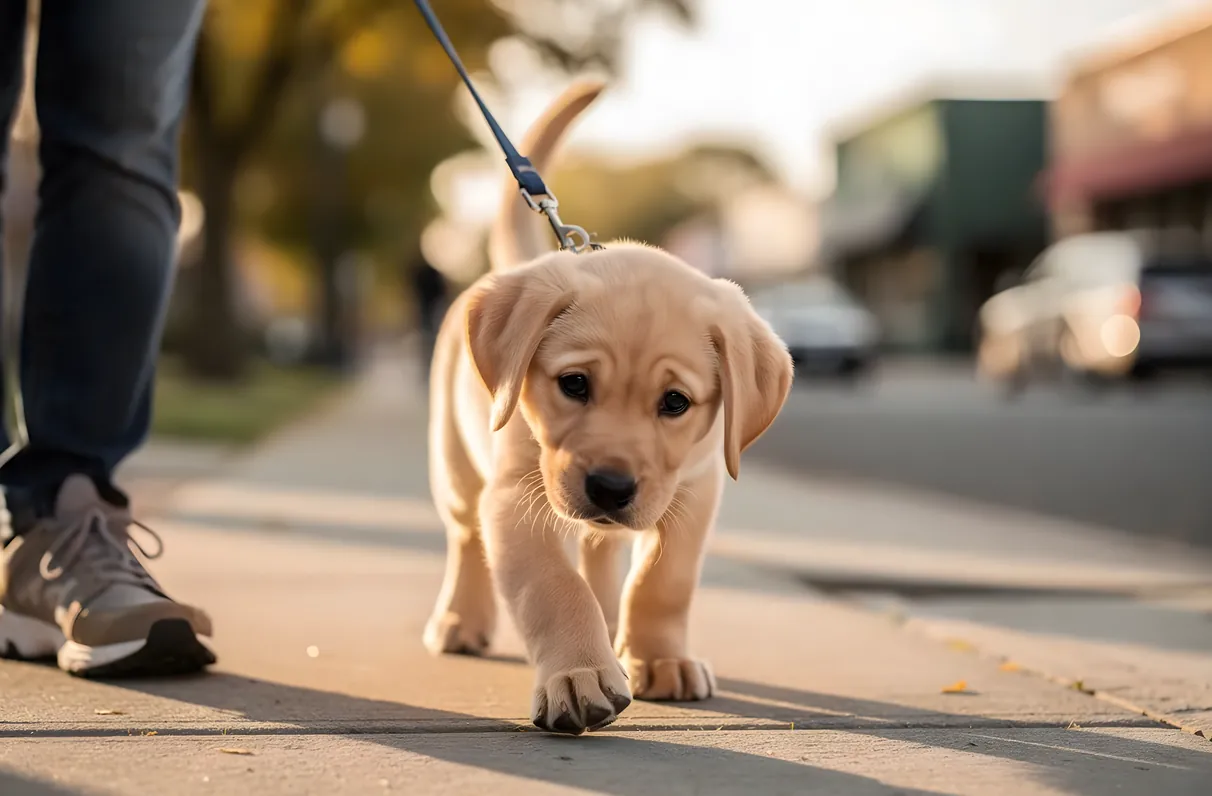
There’s no single puppy leash training age that fits every dog, but eight to ten weeks old is a reasonable starting point for the basics, as soon as a puppy tolerates wearing a collar or harness. At this stage the goal is simple: get the puppy used to the feel of a leash, nothing more.
Structured stop-and-wait practice usually waits a few weeks longer, once a puppy’s vaccination series allows short outings around the neighborhood. Every vet’s schedule differs, so treat these as guidelines, not a fixed calendar.
The Stop-and-Wait Method for Loose Leash Walking
Loose leash walking is easier to teach early, but the same stop-and-wait method works for a dog of any age still pulling toward every squirrel. The steps stay the same every time:
- Start walking normally, leash relaxed.
- The moment the leash goes tight, stop moving completely.
- Wait. The dog will usually turn back or otherwise release the tension.
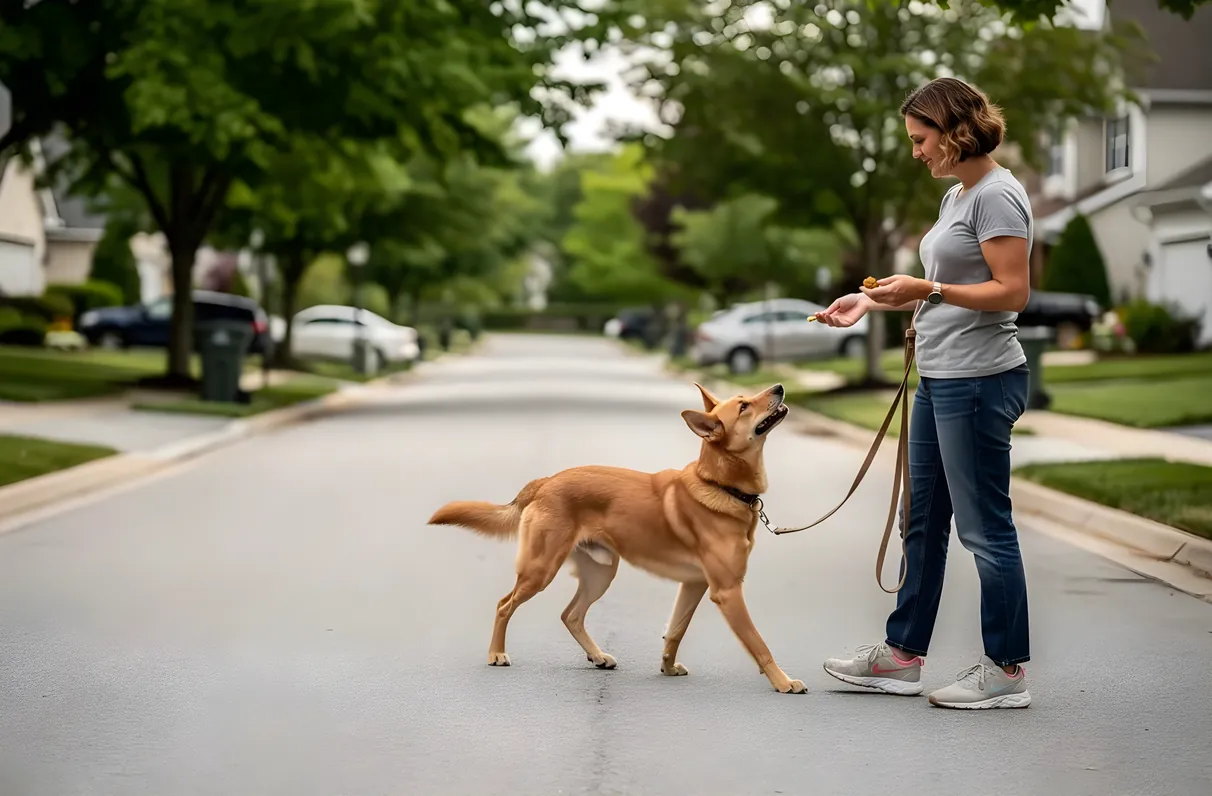
- As soon as there’s slack, reward with a treat or praise, then continue.
- Repeat the same sequence every single time the leash tightens.
The logic is simple: pulling stops the walk, slack keeps it moving. A dog figures that out fast, but only if every stop gets handled exactly the same way. One walk where pulling gets tolerated undoes several sessions’ worth of progress.
Using Positive Reinforcement on the Leash
The reward matters as much as the correction. A treat or a quick word of praise delivered while the leash is slack teaches a dog what right feels like, not just what pulling costs. Marking only the stop leaves half the lesson untaught.
Timing does more work than the treat itself. A reward within a second or two of the loose-leash moment connects clearly; one that lands ten seconds later mostly rewards whatever the dog is doing by then. Keep early sessions short, five to ten minutes, so the dog stays engaged instead of checking out.
Handling Pulling and Everyday Walk Distractions
Pulling toward a distraction is still just pulling. The response doesn’t change: stop, wait for slack, reward, continue.
The distractions on a walk change block to block, but in Frisco the lineup is fairly predictable: another leashed dog on a shared trail, a squirrel darting up a tree-lined street, a cat crossing a front yard. Any one of them can turn a calm dog into a full sled-dog impression in half a second.
For a dog that reacts hard to one trigger, distance is the quickest fix. Practice stop-and-wait farther from the distraction than the dog’s current threshold, then close that gap gradually over several walks. A dog holding loose-leash manners thirty feet from another dog today might only need fifteen by next week.
How a Professional Dog Walker Reinforces (or Undoes) Leash Training
A professional dog walker who shows up with a different leash, cue, or reaction to pulling than the owner uses can quietly unravel weeks of progress in a single visit. A stop-and-wait method enforced by only one person out of two isn’t really a rule yet, it’s a suggestion.
A good walker asks first: what method and equipment are already in use, and how should pulling get handled mid-walk. A walker who matches an existing routine keeps training moving forward. One who defaults to personal habit resets it back to square one.
A stop-and-wait method enforced by only one person out of two isn’t really a rule yet, it’s a suggestion.
Frequently Asked Questions
How long does it take to leash train a dog?
Most dogs show real improvement within two to four weeks of consistent daily practice, though established pulling habits can take longer. Short, frequent sessions beat occasional long ones.
Can older dogs still learn loose leash walking, or is it only for puppies?
Older dogs learn it just fine. The stop-and-wait method works at any age; an adult dog may just need a few extra weeks to unlearn an established habit.
Do I need to hire a professional to leash train my dog?
Not usually. Most owners can teach loose leash walking themselves with consistency. A professional dog walker helps most when a household needs daily reinforcement between sessions, but the method matters more than who’s holding the leash.
Putting It Into Practice
Leash training rarely clicks in one dramatic session. It’s built one stop-and-wait repetition at a time, across walks that feel mostly the same until, one day, the leash just stays loose.
For a puppy still working through this stage, the puppy walking service page covers what regular practice opportunities look like day to day. Bringing in outside help for the first time? Preparing for your dog’s first walk with a new walker is worth reading beforehand.
For the rest of the site’s practical guides, the dog walking resources and guides hub is the place to start, and the dog walking in Frisco, TX guide ties the whole picture together.