Senior Dog Walks in Frisco, TX
Senior dogs still need gentle daily walks. See how a Frisco dog walker adjusts pace and terrain for aging dogs, plus signs to watch for.
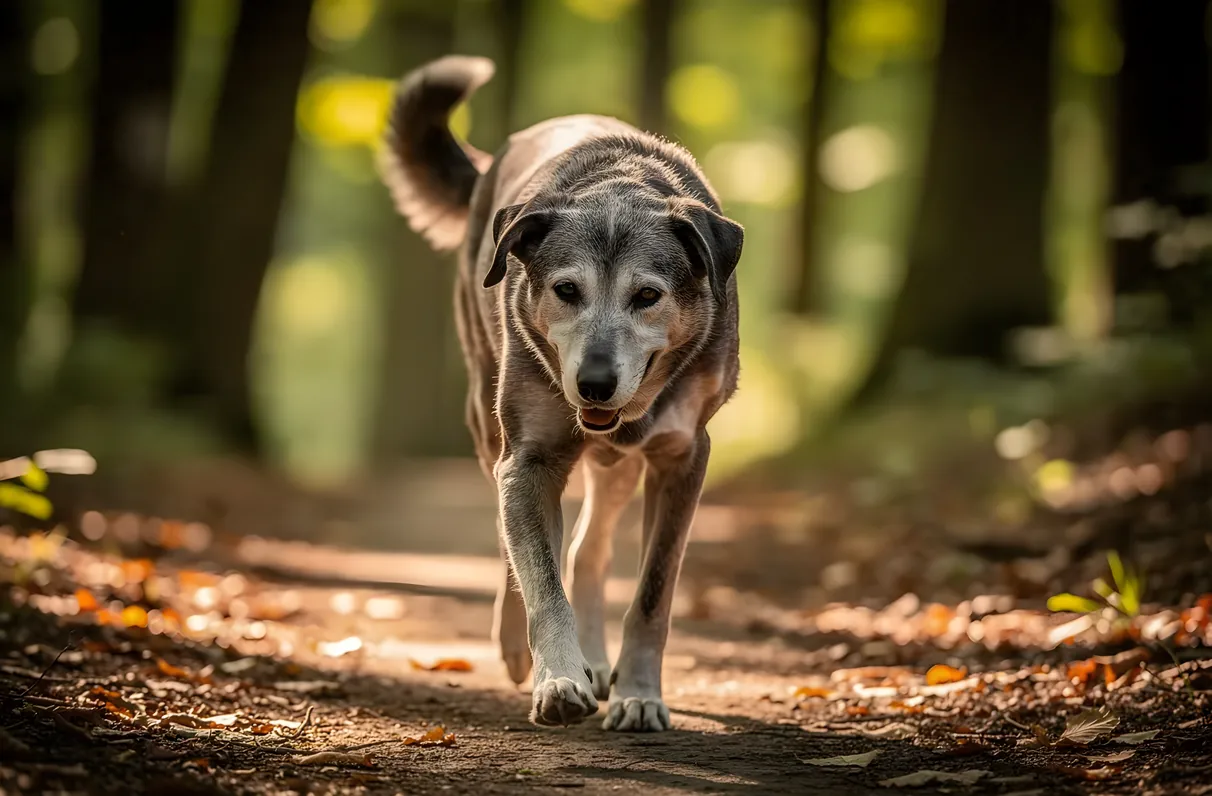
Senior dogs still need to walk almost every day. What changes isn’t whether to walk, but how: shorter distances, a slower pace set by the dog instead of the clock, flatter routes, and rest stops built into the plan rather than added once a dog is already struggling. Most dogs are considered senior somewhere between six and twelve years old, with larger breeds crossing that line earlier than smaller ones. A walk that’s become too much usually shows up as limping, lagging behind, heavy panting, or slow recovery from heat, and any of those is a cue to shorten the route. Frisco’s long stretch of hot months adds another layer: older dogs lose heat tolerance faster than they used to, so shaded trails, tree-lined streets, and cooler morning or evening hours matter more for a senior dog than a younger one on the same ground. Slowing down isn’t the same as stopping. It’s an adjustment, and getting it right keeps a walk something an aging dog still looks forward to.
Why Senior Dogs Still Need Regular Walks
Regular movement supports joint health better than rest alone. A stiff, aging joint tends to get stiffer with inactivity, while gentle, consistent walking keeps it moving through its natural range. A walk also does something a nap in the yard can’t: it gives an older dog fresh smells and new sights, often the biggest source of mental stimulation left once rougher play tapers off with age. Weight matters too, since senior dogs burn fewer calories at rest than they did as adults, and skipping walks tends to add weight rather than protect tired joints. None of this replaces a vet’s specific guidance for an individual dog, but as general care, walking remains one of the simplest things an owner can keep doing.
What a Senior-Specific Walk Looks Like in Frisco
A senior walk looks different from the walk the same dog took five years ago, and that’s the point. Duration and pace both come down, set by watching the dog’s own signals rather than a fixed loop or a fixed time. Flat terrain beats hills or uneven ground, easier on stiff joints and unsteady footing alike. Rest stops get built into the route from the start rather than added once a dog is already struggling, which keeps the walk comfortable instead of turning into a recovery exercise partway through.
Frisco adds its own layer to that plan. Shaded trails and tree-lined neighborhood streets hold up better through the warmer months than open, sun-exposed routes, and timing a walk for cooler morning or evening hours matters more for an older dog, since heat sensitivity tends to rise with age. That kind of attentive, individually paced walk is exactly what one-on-one solo walks are built for, since a senior dog’s pace rarely matches a group’s.
How Breed and Size Affect a Dog’s Aging Timeline
Size plays a role in when a dog becomes “senior.” Larger breeds are generally considered senior earlier, often around six to eight years old, while smaller breeds often don’t reach that stage until ten to twelve or later. That’s a general pattern, not a precise cutoff.
Aging shows up gradually, and differently from one dog to the next: a slower start on the stairs, a longer nap after a walk, more hesitation before jumping onto the couch. These changes arrive in small steps rather than all at once, which is why watching the individual dog matters more than watching the birthday, and why a single walking plan doesn’t fit every “senior” dog.
| Size | Senior Care Typically Starts | Common Early Signs |
|---|---|---|
| Larger breeds | Around 6-8 years | Slower on stairs, stiffness after resting |
| Smaller breeds | Around 10-12+ years | Longer naps, less enthusiasm for pace |
Signs a Walk Should Be Cut Short
A few signs are worth watching for on every walk, not just the long ones. Limping or favoring a leg is the clearest signal something’s uncomfortable. Noticeable fatigue, like lagging several steps behind or wanting to sit down mid-route, usually means the walk has already gone past what the dog wanted to give. Heavy panting beyond what the pace or weather would explain is another cue worth taking seriously.
Heat sensitivity deserves its own mention in Frisco, where warm months push temperatures higher for longer stretches than in milder climates. An older dog overheats faster and recovers more slowly than a younger one on the same route, so a shortened walk on a hot day is the right call, not overcaution. None of these signs point to a diagnosis on their own, but any showing up regularly is worth mentioning to a vet.
Common Questions About Walking a Senior Dog
How often should a senior dog be walked?
Most senior dogs still do well with a walk most days, just shorter and slower than before. A little-and-often approach tends to suit stiff joints better than one long walk.
Is walking still okay for a dog with arthritis or joint pain?
Generally, yes. Gentle, regular movement is usually better for an arthritic dog than sitting still, though the right pace and distance should follow a vet’s guidance for that specific dog.
How do I know if my senior dog has had enough for the day?
Watching the dog matters more than watching the distance. Slowing down, lagging behind, or angling toward home are the cues that it’s time to head back, whether that happens ten minutes in or forty.
Finding the Right Pace for Your Senior Dog
Slowing down isn’t the end of a dog’s walking days, it’s a new pace to learn together. Watching for small signals, adjusting the route, and building in rest stops keeps a walk something an aging dog can enjoy for years longer than skipping it altogether ever would. Having someone attentive to those signals on every walk is part of the peace of mind a professional dog walker provides for an owner during a dog’s slower years. Senior walks are one option among several covered in the full types of dog walking services guide.